Challenge: 2019 Alphabet Soup Reading Challenge – Author Edition
Hosted by: Dollycas @ escapewithdollycas.com
Time frame: January 1st to December 31st 2019
How this is going to work: I'll add '(finished)' to the end of each title to mark when I've read the book, because I have to write down each book I'm going to read for this challenge :)
A – Lloyd Alexander, Time Cat (finished)
B – Marie Brennan, Tropic of Serpents
C - C.E. Laureano, Oath of the Brotherhood
D - Deborah Underwood, Here Comes Santa Cat
E - Elizabeth Bear, The Stone in the Skull
F - Corinne Fenton, Bob the Railway Dog
G – Gilbert Morris (with Dan Meeks), The Frozen Space Pilot (finished)
H - Holly Black, The Cruel Prince
I - Itamar Srulovich and Sarit Packer, Honey & Co.: the Cookbook (finished)
J – John Flanagan, Ranger's Apprentice: The Battle for Skandia (finished)
K – K.M. Weiland, Outlining Your Novel
L – James John Loftus, Celtic Blood
M – Morgan Rhodes, Rebel Spring
N - Brian Neil Roy, The Heart Island Anomaly
O - Jeffrey Overstreet, Auralia's Colors
P - Jacob Peppers, A Sellsword's Compassion
Q – Philip C. Quaintrell, Rise of the Ranger
R – Sara C. Roethle, Tree of Ages
S – Sabaa Tahir, A Torch Against the Night
T - Rachel Starr Thompson, Seeds
U - Ursula K. Le Guin, The Wizard of Earthsea
V – Elizabeth Gray Vining, Adam of the Road (finished)
W – Gretchen Woelfle, Katje, the Windmill Cat
X - Xenophon, The Persian Expedition
Y - Yotam Ottolenghi, Plenty: Vibrant Vegetable Recipies from London's Ottolenghi (finished)
Z - Roger Zelazny, Nine Princes of Amber
Showing posts with label challenge. Show all posts
Sunday, January 20, 2019
Tuesday, October 16, 2018
Bookopoly Review

I guess this is coming a little late, but in all honesty, I forgot about the Bookopoly Contest because it got to a point that I realized that I wouldn't be able to finish the contest. I had just ended up reading too many long books, ha ha.
But, man, I read so many good books. I may not have reviewed them all, but they were good. They made me experience so many emotions and they inspired me to write (even though I don't have much to show for that at the moment).
A lot of things have happened in my life over the summer—I finished the practicum I needed to do in order to graduate from college (I'm still chasing after my teacher in order to go over what I did for the practicum because he's so busy—he's a photographer for Franklin Graham so he's always following him overseas—and he can't talk to me when he's busy); I have been job hunting but haven't heard anything back from any of the places I sent my resume to; I've grown addicted to Lord of the Rings Online, which is kinda dangerous; I went to the church camp out at the end of August; and I got into cross stitching again. When I talk about it, it makes my summer seem kinda lazy :P
But that didn't stop me from reading up to ten books! That's a record for me, I think. Tallying up what I read, it seems that I read 2 historical novels (1 being historical romance), 2 science fiction novels (1 being a graphic novel), 5 fantasy novels (1 being a historical fantasy), and 1 collection of one-page comics.
Some of the books I ended up reading this summer were books I never realized I would ever read. Or bring myself to read. But the point of the bookopoly was to go and read books you wouldn't normally read in order to accomplish all the categories of the contest.
Total Books Read for Contest: 10
A Defense of Honor by Kristi Ann HunterWhen Katherine "Kit" FitzGilbert turned her back on London society more than a decade ago, she determined never to set foot in a ballroom again. But when business takes her to London and she's forced to run for her life, she stumbles upon not only a glamorous ballroom but also Graham, Lord Wharton. What should have been a chance encounter becomes more as Graham embarks on a search for his friend's missing sister and is convinced Kit knows more about the girl than she's telling.
After meeting Graham, Kit finds herself wishing things could have been different for the first time in her life, but what she wants can't matter. Long ago, she dedicated herself to helping women escape the same scorn that drove her from London and raising the innocent children caught in the crossfire. And as much as she desperately wishes to tell Graham everything, revealing the truth isn't worth putting him and everyone she loves in danger.

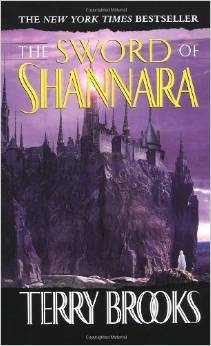
The Sword of Shannara by Terry Brooks
Long ago, the wars of the ancient Evil ruined the world. In peaceful Shady Vale, half-elfin Shea Ohmsford knows little of such troubles. But the supposedly dead Warlock Lord is plotting to destroy everything in his wake. The sole weapon against this Power of Darkness is the Sword of Shannara, which can be used only by a true heir of Shannara. On Shea, last of the bloodline, rests the hope of all the races.
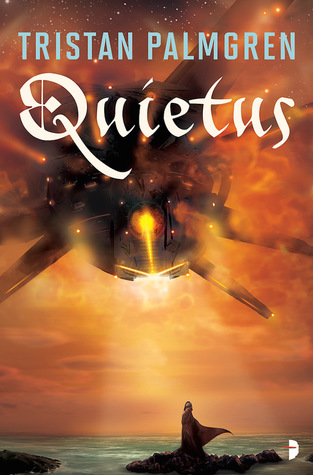
Quietus by Tristan PalmgrenNiccolucio, a young Florentine Carthusian monk, leads a devout life until the Black Death kills all of his brothers, leaving him alone and filled with doubt. Habidah, an anthropologist from another universe racked by plague, is overwhelmed by the suffering. Unable to maintain her observer neutrality, she saves Niccolucio from the brink of death.
Habidah discovers that neither her home's plague nor her assignment on Niccolucio's world are as she's been led to believe. Suddenly, the pair are drawn into a worlds-spanning conspiracy to topple an empire larger than the human imagination can contain.
The Hobbit by J.R.R. Tolkien
Bilbo Baggins is a hobbit who enjoys a comfortable, unambitious life, rarely traveling any farther than his pantry or cellar. But his contentment is disturbed when the wizard Gandalf and a company of dwarves arrive on his doorstep one day to whisk him away on an adventure. They have launched a plot to raid the treasure hoard guarded by Smaug the Magnificent, a large and very dangerous dragon. Bilbo reluctantly joins their quest, unaware that on his journey to the Lonely Mountain he will encounter both a magic ring and a frightening creature known as Gollum.
Falling Kingdoms by Morgan Rhodes
In the three kingdoms of Mytica, magic has long been forgotten. And while hard-won peace has reigned for centuries a deadly unrest now simmers below the surface.
As the rulers of each kingdom grapple for power, the lives of their subjects are brutally transformed... and four key players, royals and rebels alike, find their fates forever intertwined. Cleo, Jonas, Lucia, and Magnus are caught in a dizzying world of treacherous betrayals, shocking murders, secret alliances, and even unforeseen love.
The only outcome that's certain is that kingdoms will fall. Who will emerge triumphant when all they know has collapsed?
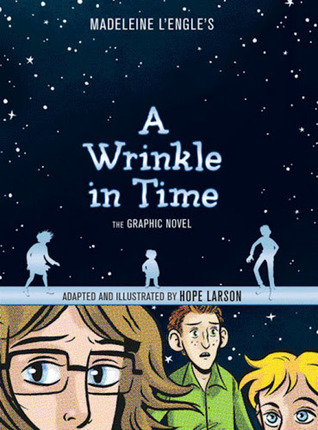
A Wrinkle in Time: the Graphic Novel by Madeleine L'Engle, adapted by Hope Larson
Late one night, three otherworldly creatures appear and sweep Meg Murry, her brother Charles Wallace, and their friend Calvin O'Keefe away on a mission to save Mr. Murry, who has gone missing while doing top-secret work for the government. They travel via tesseract — a wrinkle that transports one across space and time — to the planet Camazotz, where Mr. Murry is being held captive. There they discover a dark force that threatens not only Mr. Murry but the safety of the whole universe.
Mandie and the Medicine Man by Lois Gladys Leppard
A Cherokee superstition seems to have come back to haunt Mandie and her friends. The gold they discovered has been donated to build a new hospital, but something or someone is tearing down the walls as fast as they can be built. The guard posted to watch the site is knocked out, tied up and blindfolded.
Will Mandie be able to find her friend Joe? Will Mandie and Sallie be rescued from their kidnappers? Will Mandie learn her lesson about jumping to conclusions?
The Golem and the Jinni by Helene Wecker
Chava is a golem, a creature made of clay, brought to life by a disgraced rabbi who dabbles in dark Kabbalistic magic and dies at sea on the voyage from Poland. Chava is unmoored and adrift as the ship arrives in New York harbor in 1899.
Ahmad is a jinni, a being of fire born in the ancient Syrian desert, trapped in an old copper flask, and released in New York City, though still not entirely free.
Ahmad and Chava become unlikely friends and soul mates with a mystical connection.
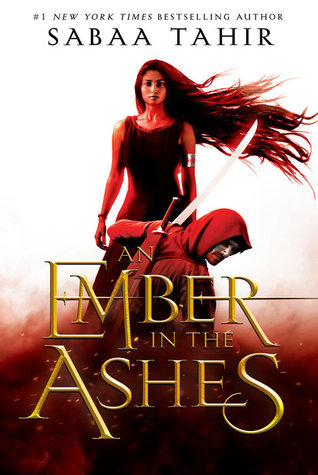
An Ember in the Ashes by Sabaa Tahir
Under the Martial Empire, defiance is met with death. Those who do not vow their blood and bodies to the Emperor risk the execution of their loved ones and the destruction of all they hold dear.
It is in this brutal world, inspired by ancient Rome, that Laia lives with her grandparents and older brother. But when Laia's brother is arrest for treason, Laia is forced to make a decision. In exchange for help from rebels who promise to rescue her brother, she will risk her life to spy for them from within the Empire's greatest military academy.
There, Laia meets Elias, the school's finest soldier—and secretly, its most unwilling. Elias wants only to be free of the tyranny he's being trained to enforce. He and Laia will soon realize that their destinies are intertwined—and that their choices will change the fate of the Empire itself.
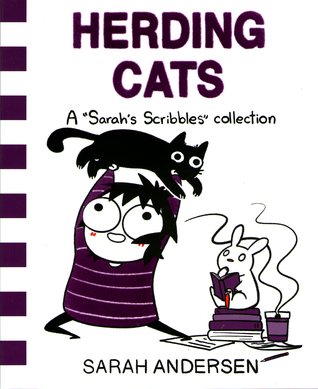
Herding Cats by Sarah Andersen
With characteristic wit and charm, Sarah Andersen's third collection of comics and illustrated personal essays offers a survival guide for frantic modern life: from the importance of avoiding morning people, to internet troll defense 101, to the not-so-life-changing futility of tidying up. But when all else fails and the world around you is collapsing, make a hot chocolate, count the days until Halloween, and snuggle up next to your furry beacon of hope.
The experience of devouring book after book this summer was envigorating, and I look forward to doing it again! ^^
Wednesday, July 18, 2018
The Sword of Shannara: a book review
The Sword of Shannara. Terry Brooks. 1977. Del Rey Books. Pages: 726. [Source: Library]
§§§
Long ago, the wars of the ancient Evil ruined the world. In peaceful Shady Vale, half-elfin Shea Ohmsford knows little of such troubles. But the supposedly dead Warlock Lord is plotting to destroy everything in his wake. The sole weapon against this Power of Darkness is the Sword of Shannara, which can be used only by a true heir of Shannara. On Shea, last of the bloodline, rests the hope of all the races.
Thus begins the enthralling Shannara epic, a spellbinding tale of adventure, magic, and myth...
§§§
Rating: 3/5
When the librarian at my library suggested this book for the "library staff recommendation" category of the Bookopoly Reading Challenge my library is hosting, I was happy because my Dad had read it once so there was a bit of a legacy going on with how he read it and then I read it...
Maybe I'll make one or all of my kids read it when they're around my age, just so they can learn to appreciate well-written novels. I'm not saying that The Sword of Shannara was well-written, but it is something I've grown to expect from a majority of the novels from the era that in which was published.
So, while I wait for the forecasted thunderstorm to come barreling over my home, I'll discuss the pros and cons, and the things I liked and disliked about the story.
As the title of the novel suggests, The Sword of Shannara is about the Sword of Shannara—to an extent. It's mostly about Shea Ohmsford, and the fact that he's the only one left who can properly use the thing.
At the beginning of the novel, we're introduced to Flick Ohmsford—Shea's adoptive brother. He's walking along, on his way home from helping some of his fellow Man who live on the outside of the Shady Vale, the quiet and quaint Shire-like sanctuary protected by the Duln Forests that surround it on all sides. Suddenly, he comes across a stranger who seems to leap from the shadows of the trees to ask him for directions to a place to stay in nearby after nearly giving poor Flick a heart attack.
This is how Allanon, mysterious historian of the Four Lands, came to stay in the Inn of Curzad Ohmsford, the father of Flick and the man who took in Shea when his mother died. And that is how Allanon found Shea, and ultimately sent Shea and Flick on the adventure of their lives.
Now, this is the kind of story that leaves me feeling a bit disappointed when I finished it. Yes, I made it all the way through this 726-page MONSTROSITY (I say that because of its length, not because it was so bad as it could be considered monstrous), and I couldn't be more happy because now I can finally read something else.
But I didn't hate this book as much as some of my fellow Goodreads users. No, I think I was okay with it, but I feel it could have been stretched out a bit. The Sword of Shannara itself could have been stretched into its own trilogy in my opinion, with more details and more attention to each event as they happened. Then, The Elfstones of Shannara, and The Wishsong of Shannara could have continued on afterwards as consecutive instalments in a series.
There was too much crammed into this one book, in my opinion. Scenes were too generalized and I noticed that several important, probably pivotal conversations were glazed over and only described. Secondary characters were hardly introduced before they were thrown into battle where they were slaughtered (though I was kinda sad that Sheelon was killed by his fellow man because he had survived so long that it seemed he should have been allowed to die of old age and not in battle).
The main characters, too, kinda felt half-baked. Shea appeared and we weren't given much of a background other than he was the last living descendant of Jerl Shannara and he's the only hope for the whole world and his father was an elf and his mother was a human from Shady Vale and that when he was a kid Curzad adopted him. There was no mention of what he liked to do in the day, or much describing of what he did in his day to day life. What was his job? How did he help Curzad and Flick run the Inn? What were his dreams? hopes? passions?
Who Is Shea Ohmsford?
Who Is Flick Ohmsford?
Who Is Menion Leah?
Who Is Balinor Buckhannah?
Durin?
Dayel?
Hendel?
So many questions and no answers. That is one of the reasons why I'm disappointed about this book. I can only hope that The Elfstones of Shannara is better than The Sword of Shannara. I'm not holding out much hope though, and it will be a while before I pick up the next instalment of the trilogy.
I made the point of making a list of all the things that were similar between The Sword of Shannara and The Lord of the Rings because I wanted to know if the novel really was as bad as a lot of people on Goodreads proclaimed. Everyone's entitled to an opinion, but I like to stray from the pack that tends to follow and agree with those who rant and rave about how bad something is.
Similarities:
- A wizened old man (Gandalf / Allanon) comes to the main character warning them of coming danger.
- Two characters (Frodo and Sam / Shea and Flick) flee their home from ghostly bad guys out to get the main character.
- They encounter an ally in the first town they come across (Strider in Bree / Menion Leah in Leah).
- Unearthly monsters chase them through the wilderness.
- They battle a tentacle monster in a swamp (at the door to the Mines of Moria / in the Mist Marsh).
- There was an epic battle between wizard-figure and servant of the evil overlord over endless pit (Gandalf versus Balrog / Allanon verses Skull Bearer).
- The evil overlord's land is shrouded with shadow (Moria / Skull Kingdom).
- An evil advisor has control over the ruler of a strategic kingdom (Grima Wormtongue and King Theoden / Stenmin and Prince Palance Buckhannah).
- The evil overlord's forces attack the last real defence of the lands of the Free People (Minas Tirith / Tyrsis).
- The evil overlord is defeated by a magical object.
I also made it a point to jot down any differences that I noticed, because there is enough of a difference that The Sword of Shannara is just able to stand on it's own. Just.
Differences:
- While Gandalf returns 17 years after Bilbo's Birthday Party and sends Frodo and Sam off on their adventure, Allanon warns Shea the day after he arrives at the Ohmsford's Inn.
- The two-character dynamic in The Lord of the Rings is friend with friend fleeing the Shire, while the two-character dynamic in The Sword of Shannara is brother–brother.
- Frodo and Sam are quickly joined by Merry and Pippin, while Shea and Flick remain alone until they reach Leah.
- Frodo, Sam, Merry, and Pippin are kind of ambushed by Aragorn while they were waiting for Gandalf at the Prancing Pony. Shea and Flick go to the town of Leah and seek out Menion on purpose. Allanon is nowhere to be seen, and the two don't expect to see him there.
- Only nine Ringwraiths are chasing Frodo, Sam, Merry, and Pippin. An undeterminable amount of Skull Bearers are searching for Shea.
- On that point, the Nazgûl are chasing Frodo because Frodo had the One Ring. They were chasing him for the ring and nothing else. The Skull Bearers were searching, not chasing, having no idea where Shea was, because Shea is the last of Shannara's descendants.
- The battle in the swamp in LotRO happens near the door to the Mines of Moria, while the battle in the swamp in The Sword of Shannara happens in the middle of literal nowhere. The monster caught Shea, Flick, and Menion while they were on the way to a certain river that would lead them to the dwarves in the forest. They knew of a danger in the swamp, which they knew as the "Mist Wraith", but they had no idea if it was real or what it was.
- Gandalf fights the Balrog in Khazad-dûm until he wins, then dies of exhaustion before being revived by the Valar as Gandalf the White. Allanon battles the Skull Bearer in the bowels of Paranor, over the deadly flames of the castle furnace. He defeats the Skull Bearer, but is dragged into the furnace and assumed dead by the sole witness of the fight, Flick. Fortunately, he manages to survive by catching himself before falling all the way in.
- The Northland is a mixture of Mordor, that one shadowed island from The Chronicles of Narnia: Voyage of the Dawn Treader, and that poppy field from The Wizard of Oz.
Of course, there were too many similarities between The Lord of the Rings and The Sword of Shannara for my liking, though I wouldn't classify it as a "Retelling" of Tolkien's work. I find it bold, though, that Terry Brooks thought he could write a story so similar to Tolkiens so soon to its publication. The Lord of the Rings was published in the span of two years—1954 to 1955—while The Silmarillion was published in 1977, the same year as The Sword of Shannara. Nevertheless, LotR was still fresh on everyone's minds, and publishing such a story at that time would only be akin to setting yourself on fire as a writer.
I have no idea how Terry Brooks managed to pull it off—to make his book so popular that he was able to go on and expand the world of Shannara with nothing standing in his way.
![]() |
| Shea (portrayed by Steve Moakler) |
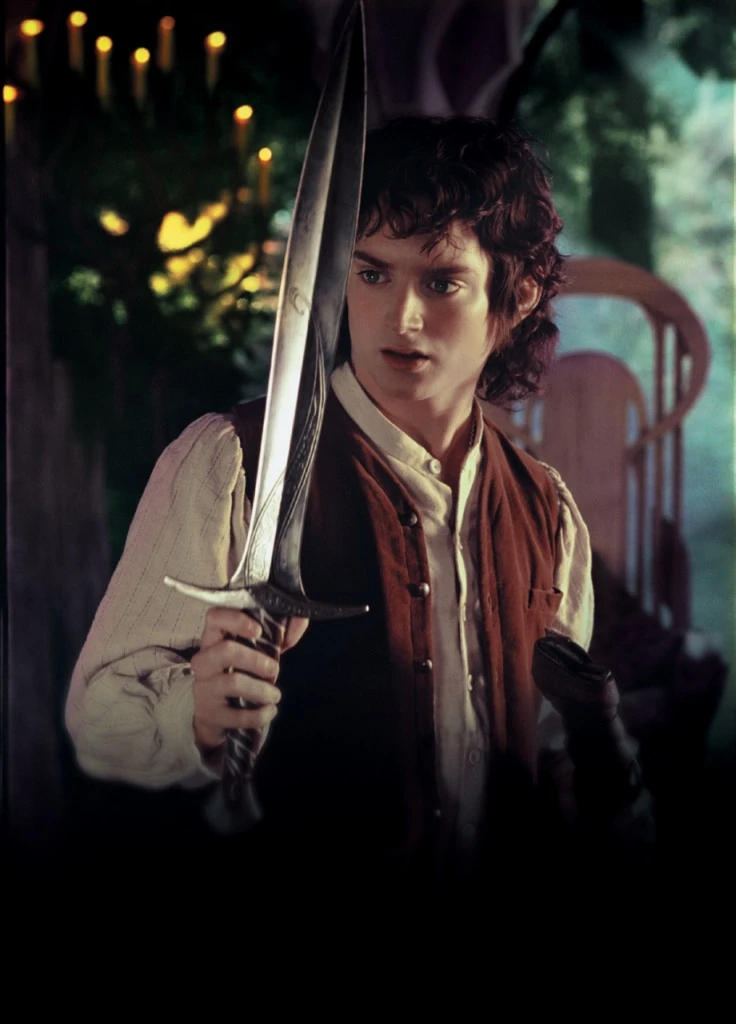
![]() |
| Frodo (portrayed by Elijah Wood) |
There are some things that I liked about the book. Shea's personality was nothing like that of Frodo's, and I liked how Brooks managed to make a point of making Shea see how flawed he was, since Shea had never seen himself as flawed or that he harboured any stereotypes (which he did, of the Trolls). Brooks managed to make the main character different from Frodo, as a human/elf hybrid is as far from a hobbit/halfling as you can get.
I managed to find a picture online of a man who kind of looks like how I pictured Shea in my head, so that was a plus. Thankfully, I liked the story enough that I was able to finish it, because if I hadn't liked it enough I wouldn't have finished it and I would have had to go back to the library and ask the librarian for another recommendation. My favourite aspect of the story would have to be, though, is the fact that it takes place thousands of years after a nuclear holocaust which brought the world as we know it (basically "the ancient Evil" in the synopsis) to an end. There are remnants of that world littered about the place—like in the Wolfsktaag Mountains, in a valley, there's the ruins of a city with an ancient guardian made of flesh and metal, obviously something mutated by the radiation from the nukes. And the Gnomes didn't dare to step in there, which obviously meant that in their culture there was a legend about the place which probably warned them not to go there because it might have been irradiated. The world's background in The Sword of Shannara was what fascinated me the most in this book.
The plot twists when they came were welcome and unexpected, placed in just the right places. I don't know when I will ever read The Sword of the Shannara again, but when I have money to burn I will buy a copy so I can have the chance to place it in chronological order like it is suggested on Goodreads. It'll be interesting to read Terry Brooks' books in chronological order because then maybe the story will make more sense.
§§§
Read in order to complete a category for Bookopoly Reading Challenge.
Qualifies as the book read for the year 1977 for a Century of Books Reading Challenge.
Tuesday, June 19, 2018
My Library's Adult Summer Reading Challenge
I know that I said that I was going to continue talking about my internship, but I decided to, instead, write about the reading challenge my local library is hosting.
So, yeah, it's an interesting thing, a Monopoly-ish knock-off. But it's cute, and it's another excuse to let me read this summer. Both me and my mom are participating, since the prize for participating—if our names are picked out of the draw—is an iPad mini. I'm so hoping one of us wins, since then Mom could use the iPad mini to read books on the Kindle app.
My mom has become addicted to those Love Inspired/Harlequin novellas, but she can't afford to pay $4.99 a pop right now.
I'm so thrilled that she has found something she likes to do now that I'm out of the house for most of the day every day!
So the rules for this challenge are:
- Complete each square and return to the library before 8pm on Friday, September 21st, 2018.
- For each book you read, record the title and author. No duplication of titles; only one square per book.
- Books must be read between June 21st and September 21st, 2018.
So the books I have to read are ones with:
- A colour in the title
- A book you can finish in a day
- An author you've (I've) never heard of
- A Graphic Novel
- A book published in 2018
- Read a biography/true story
- A book that everyone's read but you (me)
- Read a book that makes you (me) laugh
- Borrow an ebook from the library
- Read a book outside your (my) usual genre
- Read a book set in a country you (I) have never visited
- Read the first book in a series
- Listen to an audiobook/eAudiobook
- Read a book that was turned into a movie
- Read a library staff recommendation
- Read a book written by a Canadian author
I've already got a few books lined up. The one I've got for the 'Library Staff Recommendation' is The Sword of Shannara by Terry Brooks. And I could probably use The Hobbit by J.R.R. Tolkien for the 'Book Turned into a Movie' one. Once I've thought about it, I'll probably have more. Like Quietus by Tristan Palmgren for 'Book Published in 2018'.
I'm so excited. This challenge could help towards my Century of Books book challenge that I've been doing since January. I love reading, and I'm glad to have another excuse to read all the time (or when I can, lol).
Sunday, June 26, 2016
My Thoughts on Sherlock Holmes
To tell the truth, I was unsure about how much I'd like a Robert Downey Jr. Sherlock - but I was quickly proven wrong. There were several times that I couldn't help but laugh out loud. I think my absolute favourite part of the whole movie was when Sherlock jumped out of a window with an electrically-charged fork-thing in hand and ended up face-planting on the cobble-stone street below.
Now, when I said I was expecting a "normal" mystery, I meant something along the lines of: someone's murdered and they end up chasing the murderer all around the city.
Someone was murdered, several people in fact. But this is where it gets really weird.
More often than not, I forget how weird the Victorian era. The Victorian era was filled with strange beliefs and odd rebels who wished to push the boundaries of science. And that was the backbone of this Sherlock Holmes story.
The movie opens with Sherlock making his way down into a stone room under a large, multi-floored building, taking out bad guys as he goes. Soon, he comes upon a balcony looking over the room and peers down at a strange ritual taking place. Low, evil-sounding chanting fills the air as a young woman writhes on a stone table. The chanting's coming from the man in a long, ornate robe, a hood obscuring his face. As the chanting continues the young woman slowly lifts a knife, poised to thrust it into her own chest.
But before she can do that, Sherlock is there, taking out bad guys.
The chanting, robed bad guy is arrested and locked away - and it turns out that the scum-bag is a lord, Lord Blackwood in fact. And he's known in London's most prominent cult as the most evil individual to them, that he wields dark magic.
I wasn't exactly comfortable with how much of the cult was in the story, because it was borderline Satanist and there were pentagrams and rituals, etc. But I enjoyed the characters - I think Watson was my favourite. I love the Victorian era, even if London in that period was really depressing.
I really hope that the sequel is a little more normal, even if that normal is Sherlock and Watson chasing after Moriarty at night. I just don't like to watch movies that make me squirm in my seat. Though I did laugh...
Friday, June 3, 2016
My Thoughts on The Lion, the Witch, and the Wardrobe (2005)
When I was little, it had to be when I was in either Grade 2 or 3, I came home to find that my father had gotten me the complete The Chronicles of Narnia box set. As frequently as he was able, he would sit me on his lap and read to me. I believe he managed to get to The Horse and His Boy before he stopped reading to me because my brother wouldn't sit still and life got in the way.
This film version of the movie is my favourite. Based on the second book of the series, I think it does very well with the story-line, though it has been a while since I've stopped to read it. Either way, I enjoy this movie, and wished that I had sat down to watch it again sooner. I used to watch it over and over when I was younger, but it seems I've not touched this one for quite a few years.
One thing that occurred to me while I was watching this was how the people of Narnia had no idea what a human was at first glance, but they seemed to remember that humans existed before. And humans did exist in Narnia prior to The Lion, the Witch, and the Wardrobe - they were brought there by Aslan himself at the dawn of Narnia's creation. But they all seem to have left and/or died out, and the only known human population exists down in Calormen.
Honestly, it does bring up the question of why Aslan didn't just bring two brothers and two sisters up from Calormen, because they are sons of Adam and daughters of Eve, even if they don't live on Earth. But since I've been a Narnia fan for as I can remember, I know that Aslan probably brought Peter, Susan, Edmund, and Lucy from Earth and to Narnia so he could bring both worlds together.
C.S. Lewis was very meticulous with the contents and themes of his stories.
What I love most about The Lion, the Witch, and the Wardrobe is the fact that it's an allegory to Christ's crucifiction. In both the book and the film of The Voyage of the Dawn Treader, before Aslan opens up a portal to Earth through the stationary tsunami (or sky, as it was described in the book), this conversation happens:
' "You are too old, children," said Aslan, "and you must begin to come close to your own world now."
"It isn't Narnia, you know," sobbed Lucy. "It's you. We shan't meet you there. And how can we live, never meeting you?"
"But you shall meet me, dear one," said Aslan.
"Are - are you there too, Sir?" said Edmund.
"I am," said Aslan. "But there I have another name. "You must learn to know me by that name. This was the very reason why you were brought to Narnia, that by knowing me here for a little, you may know me better there." '
This film version of the movie is my favourite. Based on the second book of the series, I think it does very well with the story-line, though it has been a while since I've stopped to read it. Either way, I enjoy this movie, and wished that I had sat down to watch it again sooner. I used to watch it over and over when I was younger, but it seems I've not touched this one for quite a few years.
One thing that occurred to me while I was watching this was how the people of Narnia had no idea what a human was at first glance, but they seemed to remember that humans existed before. And humans did exist in Narnia prior to The Lion, the Witch, and the Wardrobe - they were brought there by Aslan himself at the dawn of Narnia's creation. But they all seem to have left and/or died out, and the only known human population exists down in Calormen.
![]() |
| Calormen, to the south of Narnia, separated from Narnia by Archenland. |
C.S. Lewis was very meticulous with the contents and themes of his stories.
What I love most about The Lion, the Witch, and the Wardrobe is the fact that it's an allegory to Christ's crucifiction. In both the book and the film of The Voyage of the Dawn Treader, before Aslan opens up a portal to Earth through the stationary tsunami (or sky, as it was described in the book), this conversation happens:
/\
"It isn't Narnia, you know," sobbed Lucy. "It's you. We shan't meet you there. And how can we live, never meeting you?"
"But you shall meet me, dear one," said Aslan.
"Are - are you there too, Sir?" said Edmund.
"I am," said Aslan. "But there I have another name. "You must learn to know me by that name. This was the very reason why you were brought to Narnia, that by knowing me here for a little, you may know me better there." '
\/
In this conversation that I decided to borrow from the fifth book of the Narnia series, it hints at the fact that Aslan is actually Jesus, and that he decided to take on the form of a lion in order to guide four children. When I say that The Lion, the Witch, and the Wardrobe is an allegory to the crucifiction is because Aslan died on the stone table (which represents the cross), taking Edmund's place like Christ took on our sins so we could be forgiven ^u^
I love ever aspect of this movie, despite the fact that it shortened the story-line a bit because it was obvious that they didn't want to make the movie as long as, say, The Lord of the Rings. And if they added all the details in the movie probably wouldn't have been suitable for kids and the rating might have not been a mere "PG" - and might have inched closer to "PG-13". Or dare I say. "R" like the third extended Hobbit movie (though it probably wouldn't have made it that far since they probably still kept the gore low key)?
I chose to review this as a Period Drama because the Pevensie children originate from World War II London. Peter, Susan, Edmund, and Lucy were evacuated from their home in London (I always assumed it was London since it was being bombed, though I could be wrong). The Lion, the Witch, and the Wardrobe exists as a high fantasy that exists in both the WWII era and the medieval era.
As a parting note I would like to say: even after all these years, I still like how the phoenix was summoned during the battle. And I can't wait to watch and review Prince Caspian!
Thursday, June 2, 2016
Period Drama Challenge April & May Tag Questions
1. What period dramas did you view in April & May?
I viewed The Princess Bride and Belle in April. Unfortunately, I didn't view anything in May. I was busy in May with trying to get a job and reading From This Moment and working on my poem collection project "Blue Jays & Rainy Days". I aim to fix that this month, before I'm caught up with moving to our new home :3 I also attempted to watch "To the Ends of the Earth" last month but couldn't even stomach the first episode. :P
2. Do you prefer to watch period dramas that have a happy ending or a bittersweet ending?
I prefer happy endings over bittersweet ones. I remember watching a Civil War era film some years ago about a Yankee soldier and a foal, and in the end the soldier died during a battle shortly after he and a soldier from the south worked to pull the foal out of the river in the middle of the battlefield. The Yankee soldier was the main character! He wasn't supposed to die!
3. What media forms do you prefer to use when watching period dramas (i.e. purchased DVDs, rented/borrowed DVDs, Netflix, Amazon Prime, Hulu)?
I prefer to watch DVDs I've purchased and I use Netflix liberally, since ordering anything from the library takes too long and my town doesn't have a rental store anymore. I also don't have CraveTV, and Hulu's not available in Canada yet.
4. Which period drama character's wardrobe would you like to own?
I would have to say that I would love to either have Dr. Julia Ogden's (Murdoch Mysteries) wardrobe or Olivia King's (Road to Avonlea) wardrobe. They're both so spectacular! Even though I'd rather not have to wear a skirt.
5. What period dramas are you looking forward to viewing in June 2016?
I hope that I can watch either a few episodes or an entire season of Murdoch Mysteries. Thankfully, each season isn't very long, but if I want to have a life outside my computer, I might only be able to view a few episodes :/ I might also watch one of the Chronicles of Narnia movies, if I'm able to find them. I think either The Lion, the Witch, and the Wardrobe or Prince Caspian may be in my family's massive black movie case...
I might also watch Tuck Everlasting, since I've been wanting to watch it again, but I have to borrow it from the library.
I viewed The Princess Bride and Belle in April. Unfortunately, I didn't view anything in May. I was busy in May with trying to get a job and reading From This Moment and working on my poem collection project "Blue Jays & Rainy Days". I aim to fix that this month, before I'm caught up with moving to our new home :3 I also attempted to watch "To the Ends of the Earth" last month but couldn't even stomach the first episode. :P
2. Do you prefer to watch period dramas that have a happy ending or a bittersweet ending?
I prefer happy endings over bittersweet ones. I remember watching a Civil War era film some years ago about a Yankee soldier and a foal, and in the end the soldier died during a battle shortly after he and a soldier from the south worked to pull the foal out of the river in the middle of the battlefield. The Yankee soldier was the main character! He wasn't supposed to die!
3. What media forms do you prefer to use when watching period dramas (i.e. purchased DVDs, rented/borrowed DVDs, Netflix, Amazon Prime, Hulu)?
I prefer to watch DVDs I've purchased and I use Netflix liberally, since ordering anything from the library takes too long and my town doesn't have a rental store anymore. I also don't have CraveTV, and Hulu's not available in Canada yet.
4. Which period drama character's wardrobe would you like to own?
I would have to say that I would love to either have Dr. Julia Ogden's (Murdoch Mysteries) wardrobe or Olivia King's (Road to Avonlea) wardrobe. They're both so spectacular! Even though I'd rather not have to wear a skirt.
5. What period dramas are you looking forward to viewing in June 2016?
I hope that I can watch either a few episodes or an entire season of Murdoch Mysteries. Thankfully, each season isn't very long, but if I want to have a life outside my computer, I might only be able to view a few episodes :/ I might also watch one of the Chronicles of Narnia movies, if I'm able to find them. I think either The Lion, the Witch, and the Wardrobe or Prince Caspian may be in my family's massive black movie case...
I might also watch Tuck Everlasting, since I've been wanting to watch it again, but I have to borrow it from the library.
Thursday, April 14, 2016
Period Drama Challenge
- The Paradise
- Murdoch Mysteries
- The Lion, the Witch, and the Wardrobe
- The Princess Bride
- Belle
- Sherlock Holmes
I'll start with 5 - I may watch more. But I'm in a bunch of other challenges, and since I am trying to write a complete novel, and I am trying to up the amount of novels I want read...well...I'll have to see :3
Subscribe to:
Posts (Atom)
Ranger's Apprentice: The Battle for Skandia, a review
The Battle for Skandia . John Flanagan. 2006. Puffin Books. Pages: 294. Price: USD $8.99/$11.99 CAN. Setting: Skandia. ISBN 0142413402. [S...
-
It's been a while since I've watched this movie, and suffice to say, I really wasn't in the mood to watch a romantic-comedy. I...
-
The year is 1769. Britain is a colonial empire and a slave trading capital. When I saw Belle on Netflix, I thought it looked like...
-
A Century of Books This is a challenge that bloggers Stuck in a Book and The Captive Reader are attempting to do this year. I decided ...